Transformers we buy
 Padmount transformers
 Single-phase padmounts
 Substation transformers
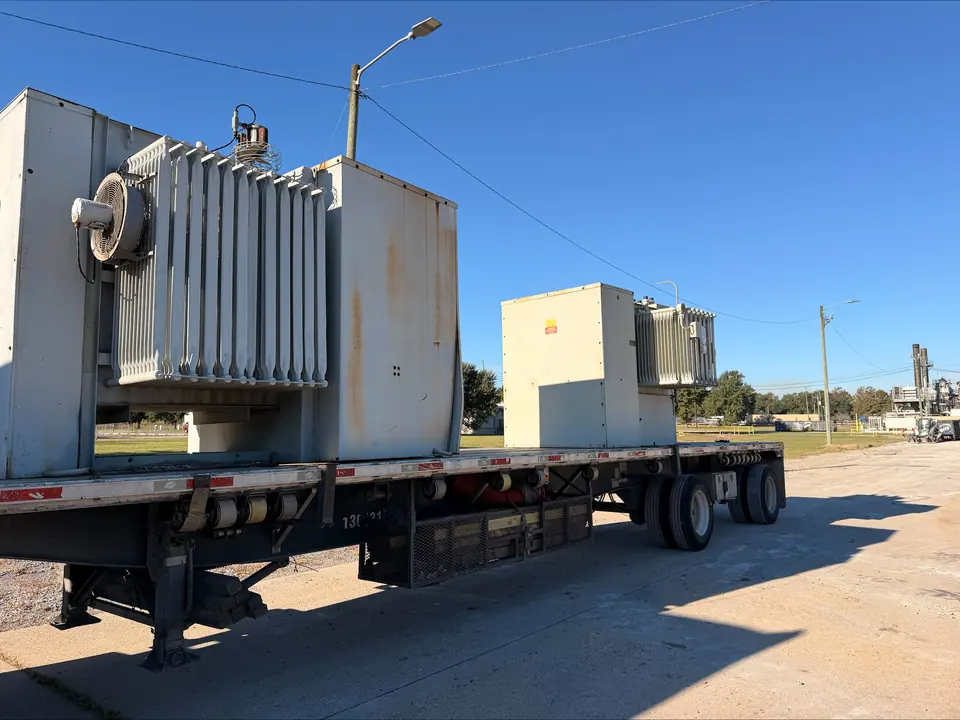 Unit substations
 Power transformers
 Pole-mount transformers
 Dry-type transformers
 Cast coil transformers
 Oil-filled transformers
 Step-up transformers
 Mobile substations
 Scrap transformersNew surplus transformers
We buy transformers of every major type
Texas Transformer Buyers buys electrical transformers of any brand, whether they are new in a crate, working, retired or failed. We buy single units and whole lots, including equipment left over from construction, removed during upgrades or taken out of service after a failure.
Our scope includes padmount, single-phase padmount, substation, unit substation, power and pole-mount transformers. We also buy dry-type, cast-coil, oil-filled and step-up transformers, including generator step-up equipment, often called GSU transformers. Mobile substations, scrap transformers and new surplus equipment are also worth sending for assessment.
If you are comparing padmount transformer buyers, include photos of the cabinet and connection compartments when they can be accessed safely. A dead-front design has insulated, shielded cable connections; loop-feed equipment has connections that allow it to serve a distribution loop. These details help identify the configuration, along with the nameplate.
A substation transformer buyer needs a different set of details, including the voltage ratings, cooling arrangement and available accessories. Browse the transformer types we buy if you are unsure how to describe your equipment. Clear photos are useful even when the paperwork is incomplete.
Sizes from 10 kVA to large MVA transformers
We assess equipment from 10 kVA pole-mount transformers to large substation and power transformers rated 20 MVA or more. kVA means kilovolt-amperes, and MVA means megavolt-amperes; both describe a transformer's apparent power rating. One MVA equals 1,000 kVA, but capacity alone does not tell us whether a unit fits another application.
Primary and secondary voltage—the incoming and outgoing voltage ratings—matter alongside capacity. Phase, frequency, winding connections, tap settings and impedance also help identify the unit. Impedance describes the transformer's opposition to current flow and affects fault current and operation with other equipment.
For larger oil-filled units, photograph every rating shown on the nameplate. ONAN means oil-natural, air-natural cooling; ONAF adds forced-air cooling using fans. A transformer may have different capacity ratings for those cooling modes. Our transformer size information can help you organize a list containing different capacities.
- Send detailsNameplate photo, overall photos, quantity, condition and location by text, email or the offer form.
- We reviewWe check ratings, voltages, condition and load-out access and ask any follow-up questions.
- Written offerPrice, payment terms and pickup details are agreed in writing before anything is loaded.
- PickupYour qualified electrician de-energizes and disconnects; we coordinate trucking and load-out anywhere in Texas.
New surplus, used, retired and failed equipment
New surplus can include unused equipment from a canceled project, a changed specification or an extra purchase. Tell us whether it remains crated, how it has been stored and whether accessories and documentation are included. Photos of packaging and the actual equipment help distinguish an unopened unit from one that has been installed or handled.
Used and retired transformers do not need to be presented as ready for service. State whether each unit was operating when removed, why it was retired and whether any testing is available. We also buy failed and storm-damaged equipment; describe the known failure, visible damage, leaks or missing parts without guessing at the cause.
Condition changes how a unit is evaluated, but a failure does not automatically mean there is nothing to assess. Include damaged units in your inventory rather than leaving them off the list. For equipment being considered primarily for recovery value, see our information on selling scrap transformers.
Statewide buying coordinated from Houston
Our office and yard sit at 6402 McGrew St, Houston, TX 77087. From Houston, we buy statewide and coordinate trucking and pickup with sellers. You can sell a transformer in Texas without being near our yard; the equipment's location and loading conditions become part of the offer and pickup discussion.
Coverage includes Houston, Dallas, Fort Worth, Austin, San Antonio, El Paso, Corpus Christi, Beaumont, Midland and Odessa, along with smaller cities and rural sites. Tell us whether the equipment is at a plant, warehouse, utility yard, construction site or oilfield location. Access conditions can differ substantially between a paved storage yard and an operating field site.
Send the site address or a clear location description with your first inquiry. Note gate restrictions, available loading equipment and any site rules affecting truck access. Our Texas service coverage explains the statewide scope; pickup arrangements are coordinated for the actual equipment and site.
Texas regions we cover
 Houston & Gulf Coast
 DFW & North Texas
 Central Texas
 San Antonio & South TexasCoastal Bend & RGV
 East & Southeast Texas
 West Texas & Permian
 Panhandle & South Plains
How to sell electrical transformers in four steps
Start with equipment details rather than arranging transportation yourself. We assess what you have, discuss the sale and coordinate freight and load-out with you. The process applies to one transformer or a whole lot, with each unit identified clearly enough to support the offer.
- Send the inventory. Call or text (951) 403-5738, email Industrial832@gmail.com, or use the transformer offer form. Include nameplate and overall photos, quantity, location and condition.
- Consider the offer. We assess the information and respond with an offer. If a rating, condition detail or accessory is unclear, additional photos or records can help resolve it.
- Agree on the sale in writing. We confirm the price, how payment is made and the pickup arrangements in writing before loading starts. Identify which units and included components belong to the sale.
- Prepare for pickup. The seller or the seller's qualified electrical contractor must de-energize and disconnect the equipment. We coordinate freight and load-out with the seller, including the loading arrangements and site access.
What to send for a useful equipment assessment
Begin with a readable nameplate photo and overall photos showing the complete transformer. For a lot, label the photos so each nameplate matches the correct unit. A simple inventory sheet is helpful when capacities, voltages or conditions vary across the equipment.
Add supporting records if you already have them. Test reports, maintenance records and drawings can provide information that photographs cannot. DGA, or dissolved gas analysis, is an oil test used to help assess internal operating conditions. PCB, or polychlorinated biphenyl, information identifies whether those substances are documented in the insulating fluid.
Do not delay the first inquiry because some records are missing. Tell us what is known and what is unavailable, and take photos only where access is safe. The guide to selling a transformer provides more detail on preparing your information.
- Equipment identification: quantity, brand, capacity, primary and secondary voltage, phase and any readable serial identification.
- Condition and completeness: operating status, removal reason, known damage, storage conditions and included cabinets, fans, radiators or other accessories.
- Site and handling details: equipment location, approximate dimensions and weight if available, loading access and available lifting equipment.
Sizes we buy
- 45 kVA
- 75 kVA
- 112.5 kVA
- 150 kVA
- 225 kVA
- 300 kVA
- 500 kVA
- 750 kVA
- 1000 kVA (1 MVA)
- 1500 kVA
- 2000 kVA (2 MVA)
- 2500 kVA
- 3000 kVA (3 MVA)
- 3750 kVA
- 5000 kVA (5 MVA)
- 7500 kVA (7.5 MVA)
- 10 MVA
- 20 MVA
- Single-phase 10–167 kVA
Sellers across industrial, utility and project sites
Facility owners and plant managers may have transformers remaining after a shutdown, production change or electrical upgrade. Electrical contractors and project managers may be handling surplus purchases or removed equipment for a customer. In either case, identify the equipment being offered and who can authorize its sale.
Utility and co-op staff may have retired distribution units or larger station equipment to sell as a lot. Developers can have unused transformers after a project changes direction. Oilfield operators may have equipment from relocated operations, retired facilities or changed power requirements.
Warehouses, manufacturing plants, commercial properties and other facilities can also have single units that no longer serve their needs. We buy transformers from sellers with different equipment mixes, not just large inventories. See the industries we buy from for more examples of relevant equipment and seller situations.
Why used transformers can be in demand in Texas
Industrial projects, utility work, commercial development and oilfield operations all need electrical equipment matched to their loads. When a transformer fails or a project schedule changes, a suitable used or surplus unit can provide an alternative to ordering new equipment. That makes accurate specifications important to anyone evaluating available inventory.
Demand is specific, not universal. A unit's capacity, voltage, condition and configuration must suit the intended system. Physical dimensions, connection arrangements and available records can also affect whether a transformer is a practical candidate for another application.
If you are comparing used transformer buyers in Texas, provide enough detail for an equipment-based assessment rather than relying on capacity alone. We evaluate your actual units and their condition before making an offer. Keeping readable photos and records together makes it easier to explain what you have when it is time to sell.
Why choose a specialist over a scrap yard or auction
A scrap route generally focuses on recoverable materials, while an auction puts equipment in front of bidders under the auction's sale terms. A transformer specialist evaluates electrical ratings, configuration, condition and completeness as well as the equipment's recovery potential. That distinction matters when a removed unit may still have value as electrical equipment.
Working directly with a transformer buyer also lets you discuss the whole inventory, site access and pickup requirements together. You can identify included accessories, explain different conditions across a lot and establish the sale terms before loading. It is a practical approach when you want a defined offer for the equipment on hand.
There is no single value formula for every transformer, and capacity or weight alone leaves important details out. Read about what affects used transformer value, then send your inventory for assessment. Call or text (951) 403-5738 or email Industrial832@gmail.com to start the conversation.
Frequently asked questions
Do you buy one transformer, or only whole lots?
We buy single units and whole lots. Send the same basic information for either: nameplate photos, overall photos, quantity, location and condition. For mixed lots, identify each unit separately so its ratings and condition are clear.
Can I sell a failed or storm-damaged transformer?
Yes. Failed and storm-damaged transformers are among the equipment we buy. Describe the known damage and include photos of affected areas, missing components or visible leaks. The offer is based on the equipment details, not an assumption that it still operates.
Do you buy every transformer brand?
We buy any brand, including new surplus, used and retired equipment. Brand is one part of the identification; capacity, voltage, configuration and condition are also important. A readable nameplate is the best starting point for assessment.
Can you arrange pickup outside Houston?
Yes. We coordinate trucking and pickup statewide from our Houston location. Share the equipment location, access restrictions and loading information so the pickup details can be agreed for your site.
What if I do not know the transformer's specifications?
Send clear nameplate and overall photos, along with the quantity, location and what you know about condition. If the plate is missing or unreadable, say so. Include existing drawings or records if they help identify the equipment.
How are price and payment handled?
We assess the equipment information and respond with an offer. Price, payment terms and pickup details are agreed in writing before loading. The agreement should identify the equipment and components included in the sale.